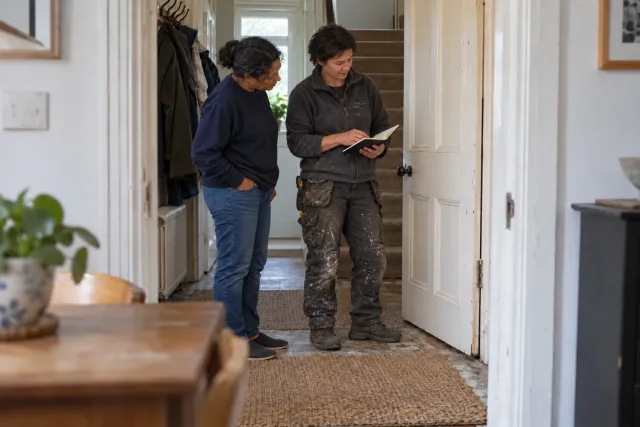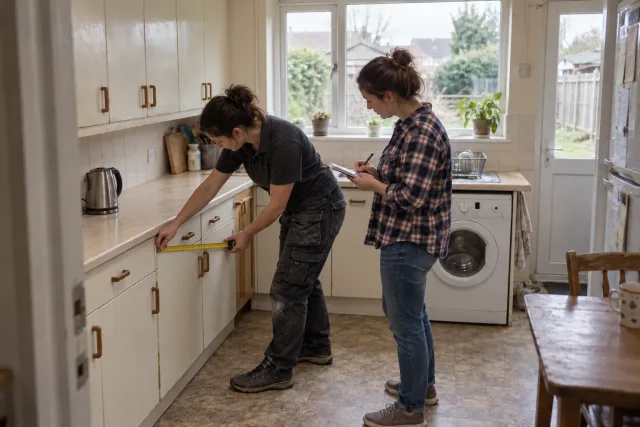
Explain the result you want
A good brief does not need to sound technical. Its job is to help a tradesperson understand the problem, decide whether it fits their services and work out what they need to see next. Begin with the room or part of the property, what you want changed and why. Keep guesses about the cause separate from what you have observed.
For example: the kitchen tap drips after being turned off, the problem started last week and you would like it repaired if practical. That is more useful than declaring that a particular internal part has failed when you do not know. Say whether the property is occupied, whether there is a preferred time to visit and whether you are gathering initial options or ready to arrange the work.
Give the facts that affect a visit
Include the town or postcode area, property type and any known access restrictions. A third-floor flat without a lift presents a different delivery question from a ground-floor house with a side gate. Mention parking restrictions, narrow stairs or limited working hours if they will affect the job. You can discuss precise access arrangements privately once you know who you are dealing with.
Measurements can help with an initial conversation, but label them as approximate unless professionally confirmed. Use a consistent unit and explain what you measured. A simple sketch may be useful for a layout change. Let the business confirm the dimensions it needs before materials are ordered. A brief supports an assessment; it does not replace a site inspection or professional design.
- Location and property type, including floor and lift access where relevant.
- What is there now and the outcome you want.
- Approximate dimensions and known restrictions.
- Your preferred timescale and whether it is flexible.
- Products already purchased, with model details if relevant.
- Questions you want answered before deciding.
Take a few purposeful photographs
Start with a wide view showing the area in context, then add a closer view of the issue or finish. A single close-up can make it hard to tell where something sits. Use available light where you can, keep the camera steady and avoid filters that change the appearance of surfaces. Number the images if you need to refer to them in your description.
Check the frame before sending. Move letters, identity documents, family photographs or anything else you do not want to share. Do not include keys, alarm codes or a photograph that explains how to access an empty home. Never climb onto a roof, remove a protective cover or touch an unsafe installation to get a better picture. Tell the business when an area cannot be photographed safely.
Be clear about budget and unfinished decisions
If you have a spending limit, explain what it needs to cover. A limit for fitting alone is different from one that must include products, preparation and decoration. You can ask whether the proposed scope appears realistic before requesting a detailed quotation. Avoid treating an early online price or a friend's different project as a confirmed price for your property.
List the decisions you have not made. Perhaps you know you want a shower replaced but have not chosen the model, or you want additional storage without deciding its layout. Ask which choices are needed to price accurately and which can be discussed during a visit. This allows the tradesperson to respond honestly instead of making assumptions you may later need to undo.
Use this starting example
We are looking for a decorator for a living room in an occupied two-bedroom flat in our town. We would like the walls and ceiling prepared and painted. One wall has old wallpaper that would need removing. The room is approximately four metres by three metres, with measurements to be confirmed. We have not chosen the paint yet and would like to discuss a durable finish. We can arrange weekday visits and would prefer work next month, with some flexibility.
Add two or three photographs and a question about what the business needs next. Send the same version to each business you contact, then update everyone if the scope changes. In the directory-first launch, contact businesses through their published details. If multi-business requests become available in your area, check the named recipients before sharing the brief and your contact information.